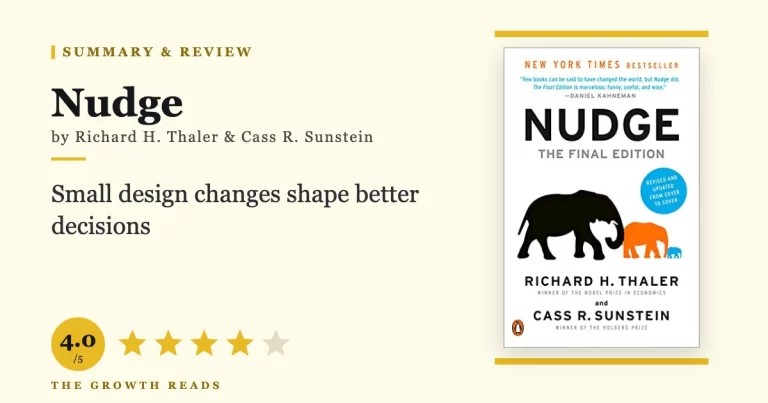
Nudge Summary & Review: How Small Design Changes Shape Better Decisions
Richard Thaler and Cass Sunstein show how redesigning choice environments — smarter defaults, better feedback, simpler options — helps people make better…
Read Summary →
"Never underestimate the power of inertia — and that power can be harnessed."
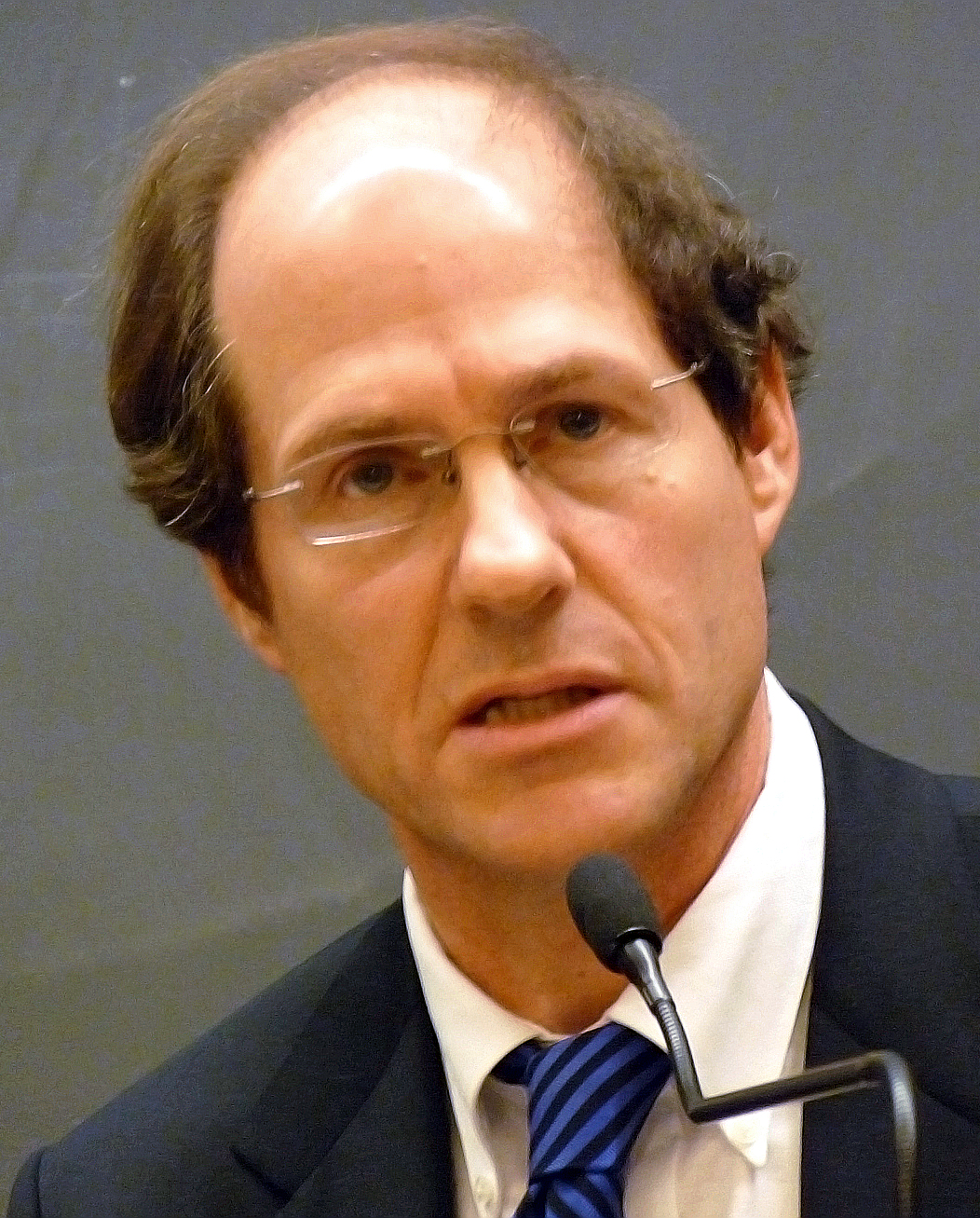
Cass R. Sunstein is a Harvard Law professor and one of the most cited legal scholars in the world. He co-authored Nudge with economist Richard Thaler, introducing 'choice architecture' — the idea that how options are presented predictably shapes decisions — into mainstream policy and business thinking, and later served in the Obama administration applying these ideas to federal regulation.

Our in-depth summaries and reviews of his work

Richard Thaler and Cass Sunstein show how redesigning choice environments — smarter defaults, better feedback, simpler options — helps people make better…
Read Summary →Every decision is presented within some structure — a menu, a form, a default setting — and whoever designs that structure, the 'choice architect,' inevitably shapes the outcome, whether they intend to or not.
Because of loss aversion and inertia, whatever option is set as the default tends to attract the largest share of choices — a finding with major implications for retirement savings, organ donation, and beyond.
Nudge argues it's possible to steer people toward better decisions without restricting their freedom to choose otherwise — preserving options while designing the default path toward what people would choose for themselves with full information.
"A choice architect has the responsibility for organizing the context in which people make decisions."— Nudge
"The combination of loss aversion with mindless choosing implies that if an option is designated as the 'default,' it will attract a large market share. Default options thus act as powerful nudges."— Nudge
"First, never underestimate the power of inertia. Second, that power can be harnessed."— Nudge
"A nudge, as we will use the term, is any aspect of the choice architecture that alters people's behavior in a predictable way without forbidding any options or significantly changing their economic incentives."— Nudge

Richard Thaler and Cass Sunstein show how redesigning choice environments — smarter defaults, better feedback, simpler options — helps people make better decisions without taking away freedom.